
Am I allowed to sell loot boxes and virtual currencies in my video game?
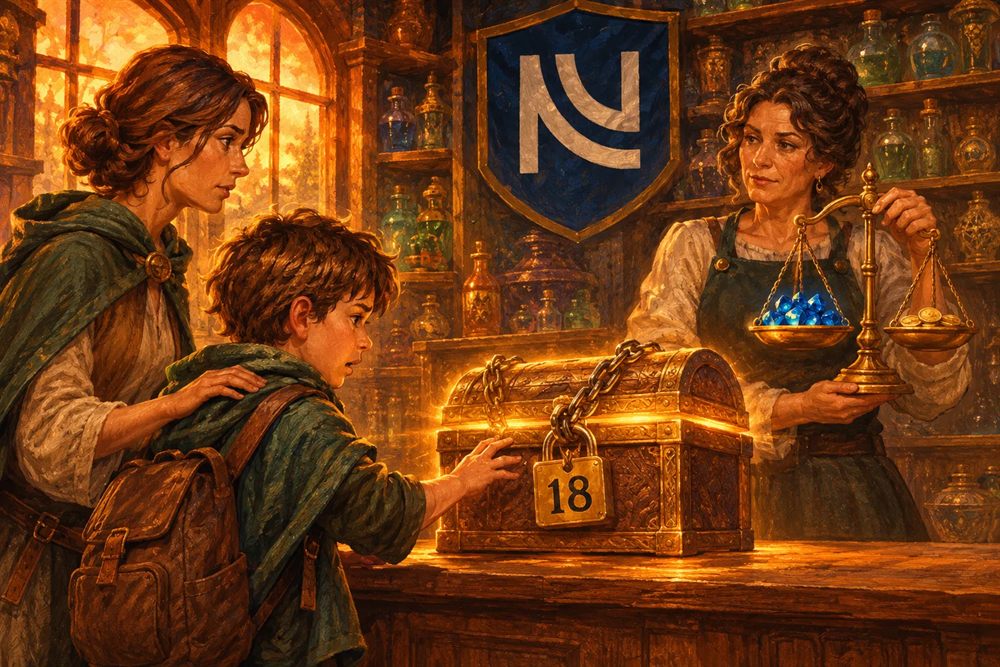
Your game is free to play, it lives on gems, chests and a season pass, and it carries a PEGI 7 or PEGI 12 rating. On 11 November 2026 the European Commission presented its proposal for a Digital Fairness Act, and under that text the answer to the question in the title is yes, though not to every player and not in any way you like. Paid loot boxes could not be offered to minors, paid virtual currency would have to be switched off for them by default and, for every player, each item would have to show its price in real money. It is still a proposal and it may change, but it already shows where the regulation of in-game shops is heading.
What the EU Digital Fairness Act is and where it stands
On 11 November 2026 the European Commission adopted its proposal for a regulation on fair business-to-consumer commercial practices, which it calls the Digital Fairness Act. The text had leaked earlier that week, and GamesIndustry.biz published an analysis of what it means for games on the same day.
Three facts frame everything else.
- It is a regulation, not a directive. It needs no national law to implement it. It repeals the 2005 Unfair Commercial Practices Directive and replaces it with a single rulebook for the whole Union.
- It is a proposal. It has to go through the European Parliament and the Council, and it will most likely come out amended. The proposal itself provides that it will apply twelve months after its entry into force.
- Size does not exempt anyone. The text says consumers are equally exposed to an unfair practice whether it comes from a large company or a small one. The size of the studio counts when setting the penalty, not when deciding whether the obligation applies.
The penalties show how seriously this is meant. Member States will have to provide for fines whose maximum is at least 4% of annual turnover in the countries concerned when the infringement is spread across several of them. In the cases the Commission investigates itself, it may go up to 6% of worldwide turnover.
The industry has reacted badly. GamesIndustry.biz sums up its position as the Commission not understanding how games work or what systems like PEGI have already done, and reports in another headline that the German games association fears "double regulation and legal uncertainty".
Loot boxes banned for minors and with visible odds for adults
The articles of the proposal do not use the words loot box. The text speaks of "paid-for variable reward systems" and defines them as virtual items offering random rewards or variable odds, acquired with money or with paid-for virtual currency. Its recitals give the examples, which are loot boxes, wheels of fortune and collectible card packs, and the reason. They share, the text says, the speculative features of gambling.
Article 15 sets three rules.
- Information. Whoever offers them must tell consumers which types of items they contain and the probability of obtaining each one.
- A switch. Every consumer, adults included, must have an effective and easily accessible tool to disable them.
- A ban for minors. Where the product is directed at minors, or the studio is aware with reasonable certainty that minors use it, they cannot be offered to them.
A box earned through play that cannot be bought in any way falls outside the definition. One paid for with money or with paid virtual currency falls inside. The recitals also cover systems acquired only partly through payment, which suggests that a free box opened with a purchased key is caught as well.
For adults the model stays lawful. What changes is that the game will also have to work with the boxes switched off, because the switch is a right of every player.
In-game currencies, priced in real money and off by default for minors
Paid-for virtual currency is, for the proposal, currency bought with money or obtained in exchange for another currency that was bought with money. According to the recitals it is enough that it can be acquired partly through payment, so a gem that is earned through play but also sold is covered. Currency that can only be earned through play and loyalty points fall outside.
Article 14 imposes two separate obligations.
The first applies to all players. Whoever sells items for paid virtual currency must show their monetary value, or an estimated value, in the currency the player used to buy the virtual one. The recitals add that where the value cannot be determined directly, it is estimated on the basis of what the player would have to pay without quantity discounts or promotional offers. In other words, a studio cannot use the per-gem price of its biggest bundle to make everything look cheaper.
This rule is not new. It is what European consumer authorities have been demanding since 2025, as we explained when looking at whether the prices shown inside a video game are accurate. The difference is that it moves from being an enforcement position to being an article with its own penalty.
The second obligation is for games directed at or used by minors. Paid virtual currency must be disabled by default for the minor and may only be activated with the approval of a parent or guardian. The proposal does not say whether what is disabled is only the purchase of the currency or also its use inside the game, and GamesIndustry.biz flags this as one of the open questions.
Pay to win, daily rewards and streaks
Article 16 prohibits offering pay-to-progress and pay-to-win mechanisms to minors. The definition covers purchases that are necessary, or are presented as necessary, for progress or success in the game. The recitals describe what is being targeted, namely artificial difficulty barriers, progression speeds that make the unpaid path illusory and competitive structures in which outcomes are effectively determined by spending.
It is one of the hardest rules to apply, and the GamesIndustry.biz analysis says so. It is unclear what happens in a game where adults and minors play together, and whether an adult may keep buying an advantage and compete against a minor who cannot.
Article 17 is different and affects all players. Where a digital product is designed in a way that encourages compulsive or excessive use, the player must be able to disable, one by one or all at once, the following features.
- Autoplay and uninterrupted content consumption.
- Notifications not triggered by something the player has done.
- Features that incentivise engagement at regular intervals, including by penalising those who do not show up with the loss of benefits. Daily login rewards and streaks belong here.
- Features that simulate a personal relationship to keep the player engaged.
The Commission will be able to extend this list through delegated acts, without a new legislative procedure, although Parliament and the Council may object. The scope of the obligation is therefore not fixed at adoption.
When is your game directed at minors, and why the PEGI rating now matters legally
Almost every prohibition hangs on the same condition, that the product is directed at minors or that the studio is aware with reasonable certainty that minors use it. A minor, for the proposal, is anyone under 18, whatever national law says about the age of majority.
The proposal says this is assessed on the basis of objective indicators, and its recitals list several.
- The age rating. A product is directed at minors, for instance, where it has obtained a rating, from the studio itself or from a third party such as PEGI, indicating that its use is appropriate for persons under 18.
- Accounts. If the game is accessed through an account that lets the studio establish, directly or indirectly, that it belongs to a minor, the studio is aware with reasonable certainty.
- Marketing. The channels used to advertise it, the characters, themes, animations, music or language, where they make the product appealing to minors.
The consequence of the first indicator is far-reaching. A PEGI 3, 7, 12 or 16 says the game is suitable for under 18s, so only a PEGI 18 falls outside. And this meets something we covered when discussing the 2026 PEGI criteria and loot boxes. Since June 2026, for new ratings, any paid random system pushes a game to PEGI 16 at least. Under the proposal that PEGI 16 solves nothing, because it is still a game suitable for minors and the boxes could not be offered to them.
GamesIndustry.biz notes this may push studios to seek higher ratings. At NN Agency we think that incentive has a clear limit. The rating is one indicator, not the only one, and a PEGI 18 does not protect a studio that knows from its own accounts that part of its player base is 15.
What acquires legal consequences, then, is what the studio knows about its players' age, which connects with what is already required today on the protection of minors in video games.
Influencers, subscriptions and dark patterns, the rest of what touches a studio
The proposal goes well beyond monetisation. Three blocks touch a studio's daily work.
- Influencer marketing. Article 11 requires every commercial communication to be disclosed with the terms "advertisement" or "commercial collaboration", clearly and prominently. It prohibits direct exhortations to minors to buy and creating the impression that a product is appropriate for minors when it is not. One paragraph affects the studio even if it publishes nothing itself. Whoever uses influencer marketing services must ensure by contract that the creator complies with the regulation.
- Subscriptions and free trials. A free trial may only turn into a paid contract if the consumer expressly agrees, there will be reminders before automatic renewal, which for subscriptions shorter than six months are only required on reaching six months or the tenth renewal, and cancelling online must be as easy as signing up. Where customer service is online, the consumer may ask to speak to a human being when other means are not effective.
- Dark patterns. Article 10 prohibits designing an interface in a way that deceives or manipulates, and the annex lists practices that are unfair in all circumstances. They include false scarcity, pre-ticked options the player has to reject, presenting "no, thanks" as the wrong choice, and making cancellation take more steps than reasonably necessary.
Several of these practices can already be sanctioned under general advertising and consumer rules, as we saw with game ads that show something the game does not have. The proposal puts them on a blacklist, which the Commission can extend and which is easier for an authority to apply and harder for a company to argue against.
Spain's own loot box ban is still in Parliament
Spain has its own text in progress. The draft Organic Law on the protection of minors in digital environments was published in the official parliamentary gazette on 11 April 2025, and its Article 5 prohibits access to random reward mechanisms, or their activation, by minors. It is still going through the Congress of Deputies.
Its definition is narrower than the European one. It requires the random result to be a virtual item that can be exchanged for money or for other virtual items, a requirement the Commission's proposal does not have. If both texts are adopted as they stand, the European one will cover boxes the Spanish one leaves out, and as a regulation it will apply in Spain with nothing to transpose.
In the meantime, general consumer law governs. Spain's Unfair Competition Act treats as aggressive, in Article 30, advertising that includes a direct exhortation to children to buy or to persuade their parents, and consumer law requires the full final price. Under those rules, European consumer authorities have already opened actions against ten companies in the sector over their virtual currencies.
What your studio can start reviewing now
Nobody needs to rebuild their shop over a proposal. What does make sense is knowing how much it would cost, because twelve months is a short time to redesign a game economy. At NN Agency we recommend starting with this list.
- A monetisation inventory. What is bought with money, what with paid currency, what with earned currency, and what has a random outcome. It is the map that tells you which article affects what.
- Rating and real audience. Which PEGI rating the game has and what the accounts say about the age of the people playing.
- Price in real money. Next to every price in virtual currency, without calculating it on the most favourable bundle. This is already being required today.
- Loot boxes. Published odds, a switch, and a version of the game that works without them for minors' accounts.
- Progression. Find the points where progressing without paying stops being reasonable.
- Retention. Daily rewards, streaks and notifications, with the option to turn them off.
- Contracts with content creators. A clause requiring disclosure of the collaboration and letting the studio ask for proof that it was made.
Part of this work serves rules already in force, and the rest puts the studio in a position to take part in the legislative debate with its own data.
Frequently asked questions
▸Are loot boxes banned in the EU?NPC
▸What is the Digital Fairness Act?NPC
▸When will the Digital Fairness Act apply?NPC
▸Will loot boxes be banned for adults too?NPC
▸What changes for in-game currencies?NPC
▸Is my game directed at minors if it is rated PEGI 12?NPC
▸Is pay to win banned?NPC
▸Does it apply to a small studio?NPC
▸What fines does it provide for?NPC
Sources
- European Commission, proposal for a Digital Fairness Act, COM(2026) 1100 final, 11 November 2026
- GamesIndustry.biz, What the Digital Fairness Act means for the games industry, 11 November 2026
- GamesIndustry.biz, German games industry association warns Digital Fairness Act could cause double regulation and legal uncertainty
- Draft Organic Law on the protection of minors in digital environments, Article 5, Spanish parliamentary gazette, 11 April 2025, in Spanish
- Spanish Unfair Competition Act 3/1991, Articles 8 and 30, consolidated text, in Spanish
- Directive 2005/29/EC on unfair commercial practices, EUR-Lex
At NN Agency, as video game lawyers, we help studios review their in-game shop, their monetisation and their legal texts before the rules change, close contracts with content creators and publishers and respond when a consumer authority comes knocking. If your game sells virtual currency or loot boxes and minors play it, let's talk before it has to be redesigned in a hurry. The first consultation is free.
Facing something similar at your studio? The first consultation is free.
Free consultation